Layer Cakes for Chocolate Addicts

Chocolate again?! There’s never enough of it, come on. Here is a post on non-yeast chocolate treats – actually about those chocolate-chocolate multilayer cakes with chocolate inside and outside and oozing from the sides… Oh!

Perfect Chocolate Cake

This first cake was a double inspiration – first I got the idea to make something special when people reminded me of my name-day (I forget about it) and second I invented some kind of filling and glaze for the cake as I had no cottage cheese or anything thicker than ryazhenka and prostokvasha in the fridge.

Perfect Chocolate Cake

A year agoBread, Soup and Crackers with some ideas on what to do with leftover bread and Koulouria of Thessaloniki

Perfect Chocolate Cake adapted from www.creativesaga.com will let you make a real festive cake out of a very easy basic cake recipe.

All you have to do is to follow the original recipe and then use your imagination as to what to add between the layers and on top of the cake. What I did was to substitute vanilla essence with ginger, cinnamon and nutmeg. I would also suggest baking the cake for less than 45 minutes – or just keep an eye on it. After the cake cooled enough to handle it, I cut the cake in three layers – the ex-upper part went underneath as it got browned too much.

Perfect Chocolate Cake

The upper layer filling is with prostokvasha and melted chocolate and the lower one is with ryazhenka + chocolate. I decorated the cake with melted chocolate – the bar was with nuts which you can see in the glaze + I had some almonds and cashew (ONE cashew) to finish the decoration.

Perfect Chocolate Cake

***

And now a more sophisticated and certainly a richer cake with distinct coffee notes which I prepared for my Father’s b-day and dared transfer it to our dacha – luckily without any major damage (had no time to take a photo of the entire cake before it was halved ; )

Chocolate-Coffee Cake with Fresh Figs

Chocolate-Coffee Cake with Fresh Figs adapted from deliciousshots.blogspot.com will make a luscious although – surprisingly – not over-sweet coffee & cardamom infused cake for incurable chocolate addicts like my Dad.

The instructions given on the aforementioned blog are substantial, I will just tell you what I changed in the recipe:

For the cake: I substituted buttermilk with milk + kefir, added cardamom and ground coffee instead of instant coffee (I filtered it to remove the solid elements). I guess I added less flour, as the batter was way too thin. The cake took more time to get ready (55 minutes) and still it was oozy in the centre.

For decoration: As I had no figs (in Russian a figa or kukish with a characteristic gesture of the thumb stuck between index and middle fingers – is a symbol of ‘nothing’ or ‘giving someone the finger’ ; ) I placed a white chocolate sweet right in the middle (did not survive until the photo session – was a special extra for the birthday person).

For frosting: I used two 100 g chocolate bars, one was with nuts; I definitely used less butter and thus less confectioners’ sugar, added cardamom instead of vanilla.

Chocolate-Coffee Cake with Fresh Figs

In contrast to the first cake which was a bit over-baked (the remedy was a rather liquid filling), this got underbaked – but no one noticed, oops, let’s say it was a molten chocolate cake (you can see that in the centre the cake is less dense than further to the edge).

Chocolate-Coffee Cake with Fresh Figs

Result: If you’re not a buttercream fan like me, you would prefer another frosting. But actually the cream was not THAT buttery and went well with the fudge-like layers, especially with its mocca coffee colour. So, just add less butter. The original cake looked so cool and rich with the frosting descending in huge ruffles… But I always cook things at least halfway to my taste – no buttercream at all would have been my choice were it not for my Dad’s preferences!

Chocolate-Coffee Cake with Fresh Figs

For even more – though not chocolate – multilayer cake ideas, see these recipes: Caramel Apple Cake which will make a soft, fragrant and truly delicious 3 layer cake, or Lemon-Blueberry Layer Cake for a multi-layer super-soft and fluffy cake which has berries right inside the batter – both very nice for the early summer days!

And it is indeed rather summer-y here, definitely the time for buttercream is over otherwise it will melt!

I was actually planning to post some Italian recipes first but got delayed waiting for the bloggers – authors of the recipes – to answer. Will make a new post soon!

G.
Greece on My Mind

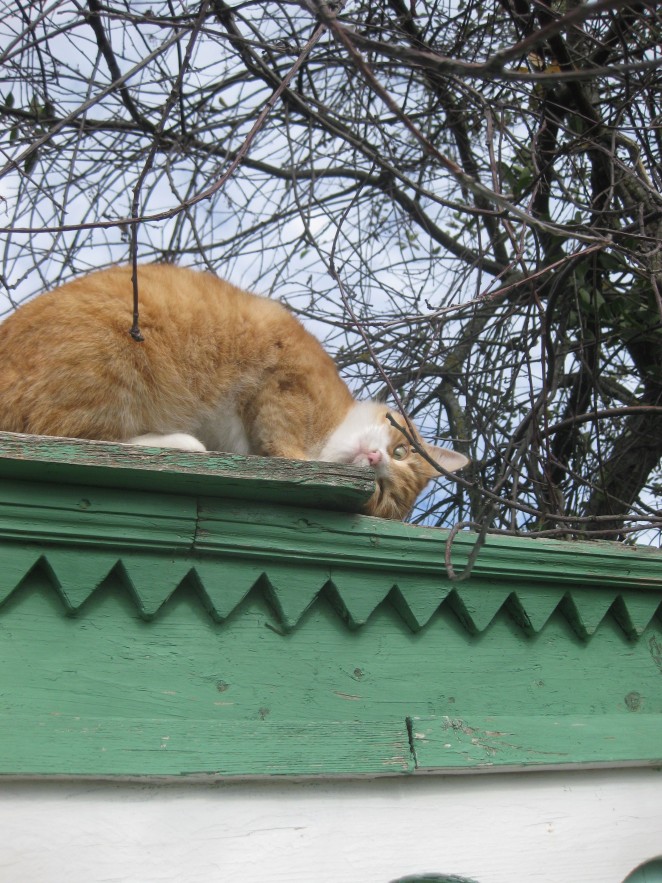
Aegina, cat in Agia Marina

Greece is always on my mind. Moreover, been cooking Greek recently. Decided to share the great recipes with you. I’m leaving you with the photos and the translated recipes and no doubt a burning desire to cook them all ;)

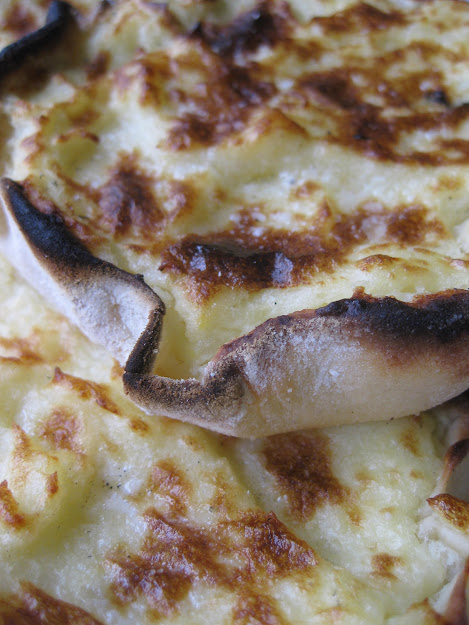
Let’s start with the main course, well, at least for me it is. The first day I arrived in Thessaloniki in 2010 I bought myself a delicious tyropita (cheese pie) and went for a walk along the paralia (beach, embankment). There are hundreds of varieties of pita in Greece, with all sorts of dough (not always puff pastry), filling (there are sweet pies like bougatsa) and sizes (hand-pies, sheet pies…) – and of course I failed to try all the vegetarian options ;) There is no way to substitute Greece for me – but there’s always a chance to bring back some memories when eating a good tyropita, like these cute cheese hand-pies:

Tiropites kai xortopites me zumh penirli

Τυρόπιτες και χορτόπιτες με ζύμη πεϊνιρλί (Cheese and Greens Pies with Traditional Peinirli Dough) adapted from www.sheblogs.eu and translated for you with the permission of the author, Magica (ευχαριστώ!) – will make LOADS of soft and chewy savoury pies. My remarks are in italics.

A year agoBread, Soup and Crackers with some ideas on what to do with leftover bread and – not at all surprisingly -Koulouria of Thessaloniki!

Ingredients:

For the dough - I halved the following dough recipe and still had a LOT!

  • 300 ml milk
  • 300 ml olive oil - I mixed sunflower + olive oils and in a lesser amount
  • 2 eggs
  • 650-700 g flour, about – I mixed in some wholewheat flour, which added extra colour + flavour
  • 2 tsp salt
  • 1 tsp sugar
  • 25 g fresh yeast or an envelope of dried yeast – I opted for the fresh

For the cheese filling (τυρί) I did not try this variant, instead I filled my pies with the two variants further on

  • 400-500 g Feta or myzithra
  • 1 egg
  • salt, pepper

For the greens + cheese filling (χόρτα και τυρί)

  • 2-3 cups of finely chopped greens of your choice (such as spinach, leeks,..) – I used Siberian Chives from our dacha (in Russian it has a funny name – licking chives… the plant’s leaves look like tulip actually) + fresh mint + dried herbs such as: basil, oregano, marjoram, thyme, leeks, spring onion, dill, parsley, wohooo, c’est la folie!
  • 100-200 g Feta or myzithraI substituted it with a 250 g pack of 5% tvorog (cottage cheese), but the amount was definitely not enough since I used less, much less greens+herbs
  • 1 egg
  • salt, pepper – use more salt if your cheese is not as salty as Feta is

My filling – potatoes + cheese (πατάτες και τυρί)

  • mashed potatoes
  • grated cheese
  • chopped fresh parsley
  • seasoning for potato dishes (herbs, pepper, salt…)
  • egg

Method:

Heat milk in a pot – do not boil it, just heat it up. Pour it in a large bowl and add sugar and yeast. Stir to melt the yeast.

Add oil, salt and one by one the eggs, beaten first with a fork. Start adding the flour bit by bit, stirring with a wooden spoon. When the dough starts forming, switch to hand kneading, adding more flour as needed. The amount of flour is not definite, just so that the dough is not sticky but oily enough (which it will be with quite a lot of oil). You will need more flour for rolling the dough out.

Cover the bowl with cling film and leave the dough to rise in a warm place for about 1 hour.

Meanwhile, prepare the filling of your choice, mixing all the ingredients.

When the dough has doubled (and it did amazingly well!), divide it into 12 balls and roll them out in circles, adding some more flour. The dough will be a bit oily but do not worry. Add filling to one side of each circle and fold the other side over, creating a crescent. To make it easier to seal the parts, brush the edges with some water and pinch slightly with a fork. I chose to make rather small pies, definitely more than 12 even from the half of the dough.

Bake in the oven preheated to 160 ‘C till the pies get browned. Mine took about 40 minutes. I also brushed the tops with egg and decorated with sesame seeds.

Tiropites kai xortopites me zumh penirli

Instead of baking all pies at once, says the author, you can freeze some of them to bake later. This is just what I did – froze the first batch for several hours to prevent over-proofing and then baked them the same evening. The second batch is still in the freezer ;) This was the first choice of filling, cottage cheese + herbs:

Tiropites kai xortopites me zumh penirli

The cottage cheese was soon finished. I had leftover mashed potatoes so off they went into the pies! The second batch, pictured with the weird Vanilla Basil which my Mum grew upon the windowsill – the flavour is anise-mint like but definitely not vanilla ; )

Tiropites kai xortopites me zumh penirli

But even a large container of my Mom’s mashed potatoes + lots of cheese ended before the dough was over… So there’s still a small bag of potato + cheese pies in the freezer along with a secret pie – with meat =) . And all this from just a 1/2 of the dough recipe!

Tiropites kai xortopites me zumh penirli

Result: They say that the peinirli dough comes from the Balkans, used for traditional ‘open’ pies like the Turkish pide. These remind me of khachapuri, especially the ‘open’ boat-like version, like this one. In the case of these pies I’m sharing with you here, the peinirli dough is used for the smaller pies like the Italian calzone or… Russian pirozhki. Tasty dough – just choose your filling!

***

Ready for a dessert? In Greece these things are abundant, although they do tend to be quite NOT dietetic. Like the carrot cake I baked recently – had to cut on the eggs and still it was soooooooo meaty! The sweet-treats shops are on every corner and open till late, especially during the Easter period, with all the traditional challah-like braided bread covered with chocolate, ohohoh. Let’s first feed a crowd with…

Mud cake portokaliou

Mud κέικ πορτοκαλιού (Orange Mud Cake) adapted from syntagesapospiti.blogspot.com and translated for you with the permission of the author, Margarita (ευχαριστώ!). Although this cake has nothing to do with a gooey chocolate mud cake, it’s a very successful recipe for a truly orange cake big enough to feed a crowd!

Ingredients:

4 eggs – I managed to make a huge cake with just 2,5 eggs
1 cup of Airan – the Greek version of Airan is milder than the Caucasian or Turkish one, you can use kefir which I did, mixing it with some milk as our kefir is thick
3/4 cups orange juice - freshly squeezed, of course!
2 cups of sugar – I used 200 g
3 cups of self-raising flour – make your own, adding some salt and soda to the all-purpose flour
zest of one orange + I added ginger
1 cup of margarine – I used butter + apple jam with several apple slices… Just needed to finish it ;)
1 package of baking powder

Method:

Preheat oven to 170 ‘C.

Place all the ingredients in a large bowl and whiz them with a mixer for 4 minutes. (I did it by hand).

Grease and flour a baking pan. Pour the batter in and bake for 1 hour and 20 minutes. The author remarks that this cake has a trick – it looks ready but it might be not. I baked my cake for a lesser time, perhaps because of the lesser amount of eggs. I also decorated the top with pine nuts, they had been around for too long, haha. 

Mud cake portokaliou

The top has cracked nicely and the rise is great. I liked the zestyness of the cake, it’s really orange-y orange!

Mud cake portokaliou

The slices from the apple jam that I threw in appeared in the last pieces of the cake ;) But this was just the first slice…

Mud cake portokaliou

The cake looked like a huge edible PacMan, haha : )  Here pictured with a Cycladic statuette we bought almost 20 years ago in Greece.

Mud cake portokaliou

Result: very easy and very zesty. If you prefer your cakes rather sweet than zesty, add less of orange zest, for sure. But I liked it as it was, it stings your tongue a bit. The pine nuts was a nice addition too, as the rest of the cake’s ‘body’ had nothing else to chew upon. Moreover, I suppose, they add some extra Mediterranean flavour

***

And for even more flavours and more sweet pleasure, try these biscuits with Greek wine:

Smyrneika Koulourakia

I’m not promoting this wine or whatever, I just liked how it shone in the sun ;) It made a very good risotto con zucchine too (to be posted later)! I remember we made risotto on retsina and even red wine in Thessaloniki, hehehe. Those were the Erasmus days! I also assure you, even the simple koulourakia (here’s a more buttery recipe) from the nearest bakery are great in Greece.

Smyrneika Koulourakia

Smyrneika Koulourakia (Biscuits from Smyrna) adapted from www.en-direct-dathenes.com and translated with the kind permission of MaryAthens (merci!) – will make very soft and just super biscuits! These come from Smyrna, ancient Greek city where now there’s Turkish Izmir. I actually skipped the ‘trick’ of these biscuits… I did not have baker’s ammonia required for the recipe, so I chose to use the remaining Greek Γλυκορίζι (Liquorice). They are different things, of course, but why not? The former is a leavening agent but with the added baking powder my biscuits puffed well.

Ingredients:

  • 500 g of flour
  • 80 g of butter
  • 70 ml of lukewarm milk
  • 150 ml of sugar
  • 12 g of baker’s ammonialiquorice
  • 2 eggs, separated + 1 yolk + I added some sesame seeds on the top
  • vanilla
  • 1 tsp baking powder
  • zest of one orange
  • ¼ tsp salt – I forgot about it

Method:

Divide the sugar in three equal parts.Beat the butter with the first part of the sugar. Beat 2 yolks + vanilla with the second part of sugar. Beat the whites until soft peaks form (en neige) with the rest of the sugar and salt. Mix everything together carefully, adding the zest.
Dissolve baker’s ammonia in the lukewarm milk (here I diluted liquorice in milk) and add to the mixture.

Mix the baking powder with 1/2 of the flour. Gradually mix it in the mixture, then add the rest of the flour until you get elastic dough. Form the biscuits – make a long rope and then fold it thrice shaping an S, slightly pinching the ends. Place the biscuits on a sheet covered with baking paper.

Beat the egg yolk (you will need an entire yolk for all the koulourakia) with a tablespoon of milk and a bit of vanilla essence (I added vanilla) to brush the biscuits (you can also scatter some sesame seeds on top).

Bake in the preheated oven (180 ‘C) for 15 to 20 minutes. The biscuits keep well in a metal box. Or just eat them right away =)

Smyrneika Koulourakia

Result: Inside they are white with specks of lemon zest, chewy and not over sweet. My parents ate them with super-sugary raspberry jam, I ate them sketo (plain) or with protokvasha. The use of liquorice did not yield in a specific anise flavour, maybe it did not add anything at all… If you follow the original recipe and add the baker’s ammonia, the aroma will be very strong while baking but then it will be gone either, says MaryAthens. Up to you to chose!

Smyrneika Koulourakia

There will be quite a lot of biscuits, also enough to feed a crowd ;) The Greek recipes are destined to feed lots of friends, relatives and neighbours, this is the famous Greek hospitality and love of food, for sure!

Smyrneika Koulourakia

Those were truly delicious things – and abundant – pies, cake, biscuits. So I say to the authors of these recipes a sincere ΕΥΧΑΡΙΣΤ’Ω! Thank you!

Smyrneika Koulourakia

Will come back soon with more international recipes : )

G.
Experimenting with Sourdough Bread

There will be three recipes of sourdough bread in this post from France, Italy and Germany – presented in the order I made them – and all are a definite experiment and no-doubt experience! I thank all the authors first of all – for giving me the pleasure of baking your own bread and then eating it and taking hundreds of photos and sharing them. Isn’t it wonderful? But I have to admit that as a lazy perfectionist, I’m always lazy to get back to the blogs where I got the recipe from to thank them and write my comments – as I’m baking on the roll, almost each day, I just simply do not have time to recognize each and every recipe source. But this time I was so impressed with the long life and super texture of one sourdough bread recipe and the flavour and taste of another that I finally posted my ‘thank you‘ notes in the comments.

It’s interesting, that a year ago I made a post about… sourdough bread. This is my therapy, I guess. BREAD.

A year ago with crusty & soft Sour Rye pictured with lemon :)

Pain de Meteil au citron

A French recipe…

That was already long ago that I baked this first bread, the 100% French recipe for the méteil bread – which means a mixture of wheat and rye flour. I found some a bit too-Frenchy (I mean, super-exquisite and sophisticated…) recipes on the web page of Les Nouvelles de la Boulangerie Pâtisserie (The News of you-know-what-lovely-things). Not that I read this magazine, I just somehow came across it while searching for bread baking courses in France… Dropped the idea but preserved the recipe for some sunny day – which finally arrived – the bread is moreover made with sunny lemon zest and juice:

lemon zest

Pain de méteil au citron (Wheat & Rye Lemon Bread) adapted from www.lesnouvellesdelaboulangerie.fr will make lots of lemmmmmmony buns!

As the original recipe suggests, this sort of bread spread with salted butter is associated with fish and shellfish (not for me). The recipe comes from the book Petits pains et viennoiseries des quatre saisons by Thierry Dany. I hope the author will be only glad to have the recipe translated into English (which taught me lots of new bread-related words – I will share them with you) and let go on the Internet! (my remarks in italics)

Pain de Meteil au citron

{so tiny as the rolls were, we somehow managed to slice them THAT big}

Ingredients

  • 650 g rye flour (T 130 for those of you in France)
  • 350 g flour (T 65) - I used all-purpose + wheat & rye bran + sprouted wheat & rye… well, you know me!
  • 25 g of salt
  • 10 g yeast – I used active dry yeast, and activated it first in warm water
  • 250 g of firm sourdough starter or old dough (levain dur / pâte fermentée) – I have been feeding my rye sourdough baby for 2 days, last refreshment was with more flour than water to simulate levain dur (which is made with fruit juice, actually…)
  • 650 g water
  • zest and juice from 3 lemons – I used just a half of a lemon and that already gave a perceptible result!

Method

Frasage (first stage of kneading) – mix all the ingredients (1st speed). – No mixer, no 1st speed, only one speed – that of my hands! ;)

Pétrissage (mixing/ kneading) – beating 3-4 minutes at 2nd speed

Pointage (first rise) – bulk rise for 1 hour – I left it rising longer

Pesage (weighing) – originally 25 X 80 g rolls – but they would have been too small! so I made just 20

Façonnage (shaping) – Façonnage says the recipe =) well, I just made round rolls – I advise you to really shape them well as those that I were too lazy with got quite flat.

Apprêt (second rise) – 45 minutes to 1 hour, on a floured couche, la tourne à clair (seam down).

Cuisson (baking) – at 250-260°C, about 15 minutes. With steam at first, then at falling temperature and open door. There’s no slashing of the top as the tourne à clair (placing them seam down) permits their top cracking (éclatement is a finer word…) in the oven. – Forgot about that and made 1 slash on each, also baked them longer than 15 minutes, diminishing the temperature and then leaving them for some minutes with the door ajar – definitely more than 15 mins in total.

Pain de Meteil au citron

{this very éclatement!}

Result: You’ll get a whole bag of small rolls, crunchy crust and chewy crumb. The rolls get quite hard as the days go by – but the distinct lemon flavour remains! which is their most definite feature.

Pain de Meteil au citron

{rolls in a bag}

Pain de Meteil au citron

Do you see the specks of lemon yellow in the crumb?

Pain de Meteil au citron

The experiment here was in following a rather restrained recipe in French – and adding lemon : )

***

An Italian recipe (o quasi)…

I had some pea flour which I used mostly to thicken soups – mixing it with hot melted butter and some water and then adding this kind of roux to the soup. And this flour was definitely in need of using, being kept in the pantry for a year already… Just at the time I thought how on earth I was going to use about 300 g of come on, pea flour!? I stumbled upon this very recipe:

CHICKPEAS SOURDOUGH LOAF

Chickpea Pea Sourdough Loaf (Pane di Ceci Piselli) adapted from www.myitaliansmorgasbord.com – will make – simply – one of the best sourdough bread recipes I’ve tried recently. See further for more details. Thanks, Barbara!

As usual, go to the original blog for the recipe, here are just my changes:

I used my rye sourdough starter, feeding it for two days to get the required 430 g. That, for starters, gave a certain rye-ish taste to my bread. Instead of chickpea flour which I used up in falafel some months ago, I added a combination of pea flour + rye flour+ rye bran which gave the bread an even more pronounced rye-side. I used less salt.

CHICKPEAS SOURDOUGH LOAF

As for the procedure, I baked the bread for 40 minutes in total and did not bake it at 250 ‘C for the entire half-hour as it was getting too dark, lowering the temperature to about 225 ‘C.

CHICKPEAS SOURDOUGH LOAF

Love how the texture of the linen cloth got reprinted on the top of the loaf! Unfortunately – as I thought when placing it in the oven – the other not that nice topped loaf got stuck to the cloth resulting in this:

CHICKPEAS SOURDOUGH LOAF

It’s nice even thus, heh? OK, just one more shot:

CHICKPEAS SOURDOUGH LOAF

or maybe more…

CHICKPEAS SOURDOUGH LOAF

Those two were clinging to each other in a funny way. And even more shots:

CHICKPEAS SOURDOUGH LOAF

The experiment here was in using the flour I wouldn’t normally use in a bread. Although when the bread got drier the pea flavour got intensified (but there was nothing unpleasant to it), the colour of the crumb seemed totally regular-brown, not greenish against all doubts ;) Just wonderful with zesty masdaam cheese!

CHICKPEAS SOURDOUGH LOAF

{photo taken when there was no sun, but still the colour is not green ;) }

Result: The balance between the crust and the crumb, the taste… JUST great! This bread has proved resistant to time, keeps amazingly well, there’s no yeast added to it. And when it got dry as we ate it only as ‘black bread’ with lunch, there was just a wedge of it left and I ate it with tssss apple jam! And also cubed the last piece of the bread was a nice addition to the pureed… Curried Split Pea Soup which wasn’t green in my edition either ;)

CHICKPEAS SOURDOUGH LOAF

***

At first I thought this post will be about the two breads from above and finally added this one too – did not manage to take a picture of the entire loaf but even it’s third part looks fantastic! This one is still in our bread box but for sure it won’t linger there.

A German recipe… Here I have to agree with the author of the recipe that the German rye bread is probably the best (after the Russian, of course…), judging from all the types of rye bread that I have tasted so far. They just have found a way with rye there, in Germany.

Gerstenbrot

Gerstenbrot (Dark Blackened Sourdough Bread) adapted from bitterbaker.com – will make a super dense and chewy bread with a trick on its top. Thanks, Yvonne!

My changes:

As our rye flour here in Russia is not that dark, in order to give the bread more colour, I added rye bran (there’s a variety which is almost grey) and scalded rye malt – the latter also increased the flavour of the bread. I had to use much more flour than the recipe stated, perhaps my starter was too liquid or something – I could not have kneaded the dough otherwise, it was too soppy. Instead of sea salt I used table salt.

Gerstenbrot

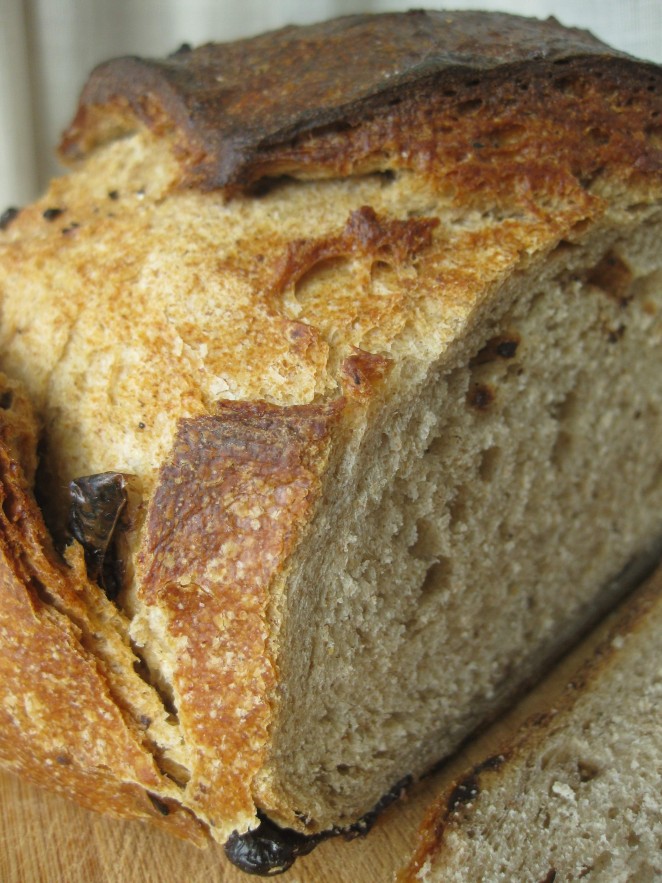
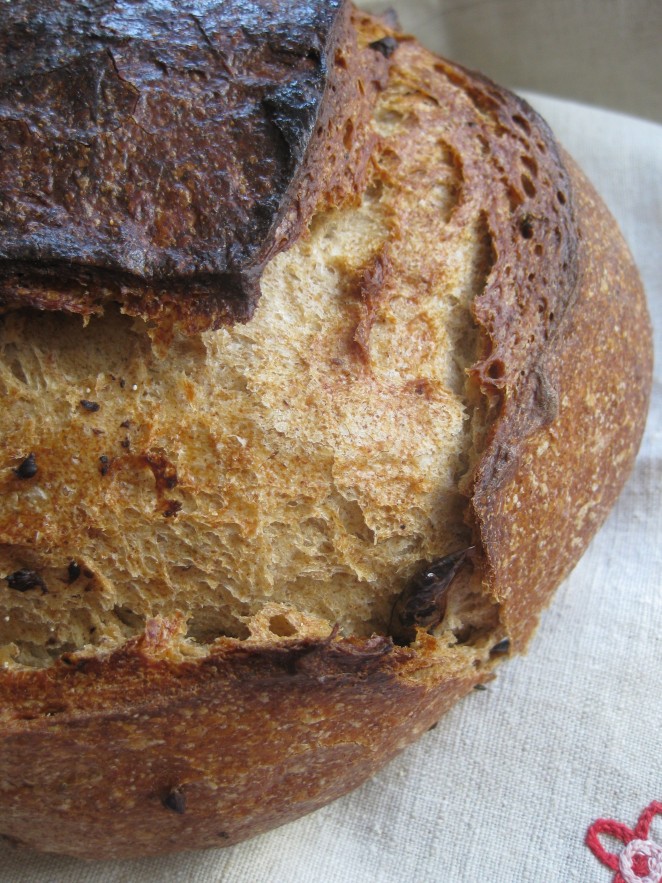
The experiment here was in blackening the top. I did not manage to perform the correct blackening as my oven refused to broil the top – it rather started baking the bread already, creating a sort of already baked cover. But surely the top came out very unusual – half of it is smooth and the other half, where the dough was desperately trying to get out from the cracks in the ‘cover’ while risisng – very avant-garde, haha.

Gerstenbrot

The smooth rather blackened and crackled part of the crust:

Gerstenbrot

The evening sun – love its warm colour. It’s getting so light every day in the evening, as the white nights are getting closer!

Gerstenbrot

Result: The crust is very thick (VERY) and crunchy and the crumb is just really ryeish! Need a very sharp – better serrated – knife to cut it. This bread doesn’t keep as well as the Pea Flour Experiment, but is a very nice sourdough bread indeed.

Gerstenbrot

{there’s a gap between the top that got already half-baked and the rest of the crumb}

I get so enthusiastic when it comes to bread… and I really want to pass this passion on to people. So, keep baking and don’t get scared of the procedure, it’s worth it just as any other thing which requires time and effort and then pays you back.

Happy experimenting and Victory day!

G.

The recipes of Pain de méteil au citron and Chickpea Pea Sourdough Loaf submitted to Barbara (Bread & Companatico) and Sandra (Indovina chi viene a cena) at Panissimo 


Everything in Chocolate

The second part of the St Petersburg post will have to wait – it’s Easter time here and there are some recipes which go well with this season. I’ve crossed today crowds of people filing in and out of the local churches to consecrate their traditional leavened Easter cakes, called kulich, and coloured eggs. Most of the baked things are bought in stores nowadays, with colourful sprinkles and sugary toppings. Maybe that’s why you’d better consecrate them? Kidding. It’s just that I prefer to avoid crowds. What I wanted to make was something similar to what my Mom used to bake each Easter – poppy seed rolls (she actually made poppy seed PIGS, such was the size of her rolls! something like this Dan Leppard’s Poppy-seed Walnut Strudel I made last year) – with a filling made from poppy seeds, walnuts and sugar mixture processed in a meat mincing machine ;) I haven’t ventured to make them yet – although bought some fresh yeast just in case. Instead, I will share with you two leavened sweet treats with chocolate.

melted chocolate

Warning: If you decide to make a photo session with chocolate – be prepared to have EVERYTHING in chocolate, including the camera, yourself and even the rest of the chocolate!

I have spoken little about chocolate in my blog although I love it dearly, you know, that bitter kind, not the milky or even white one. My favourite chocolate bars are of course from the famous St Petersburg chocolate factory (named after Krupskaya, Lenin’s wife) – the bars are called Osoby (Special) and contain no less than 53% cocoa. This St Petersburg delight has found its admirers (addicts?) from as far in the world as Puerto Rico ;) (Melinaki, I wish I could send it to you but in light of all that happens to our worse than snail-mail Russian post, I would rather not!)

Cardamom Flavoured Cinnamon Rolls

{you can spot the chocolate bar in question underneath the rack}

Let’s start with something more or less Easter like – these are Cardamom Flavoured Cinnamon Rolls adapted from www.mydiversekitchen.com  (originally from thefreshloaf) – the recipe yields two dozen pretty buns with lightly sweet dough and the glaze which makes up for it completely!

As usual, I refer you to the original recipe – here I give only the changes I’ve made (that might give you some idea on how to twist the recipe your own way!).

For the dough part I added just a tiny bit of wholewheat flour to the all-purpose and less salt (which was a good idea).

For the filling I used less melted butter, less brown sugar (I KNEW there will be a rich glaze!), I opted for cashew nuts and instead of raisins I scalded some poppy seeds (to soften them) and used them as part of the filling.

And as for the glaze… How could one agree to really leave it out? =) I used a whole bar of chocolate (the cheaper one I use for baking).

Cardamom Flavoured Cinnamon Rolls

I had to leave the dough in the fridge for several hours for its first rise and also left the poppy seeds (scalded) in some water to soften them and when I came back… the seeds sprouted! well, they grew some white ‘legs’ =) Haha, SPRING time!

I baked my buns for less than 20 minutes.

Cardamom Flavoured Cinnamon Rolls

Result: The dough part is not sweet but the abundant chocolate topping adds just enough sugar. Poppy seeds and nuts are a crunchy addition to these buns. Best eaten on the day of baking as they get harder the next day. The cardamom was not that distinct in these buns, I should say.

Cardamom Flavoured Cinnamon Rolls

{unglazed – and everything was so clean too… Before THIS happened:}

Cardamom Flavoured Cinnamon Rolls

I wouldn’t go into much detail about getting all in chocolate. In Russia there’s a saying that when your life is great and you’re particularly lucky, then you have everything in chocolate ;)

Cardamom Flavoured Cinnamon Rolls

{rows of rolls}

***

And now let’s look at the second chocolate feast / festive treat: a loaf this time, just like black/ brown bread from the outside but definitely not at all that from the inside! Its name even refers to the Black Forest desserts which most of the time means there’s chocolate and cherries – but surely this treat has nothing to do with the famous all cream all chocolate torte.

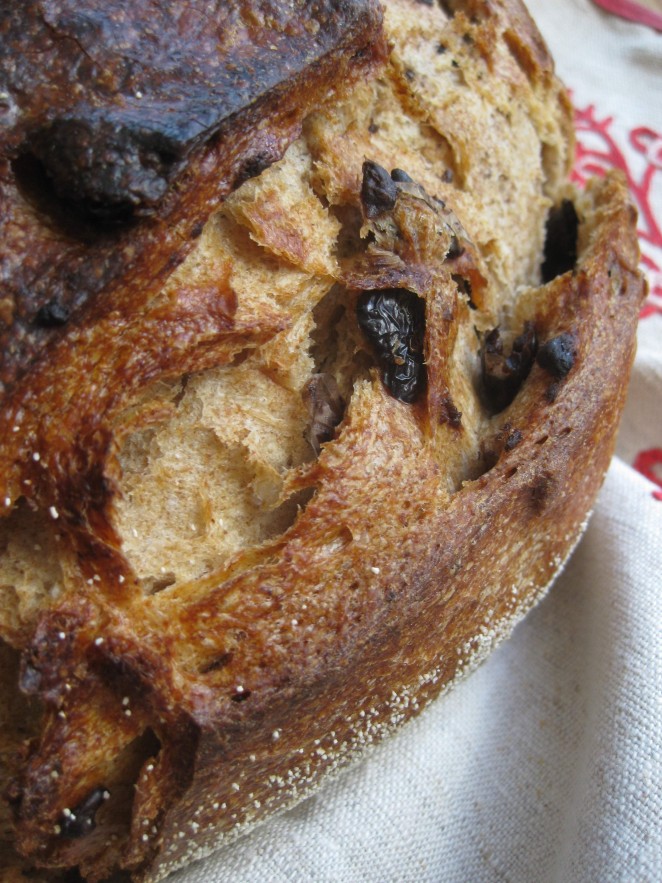
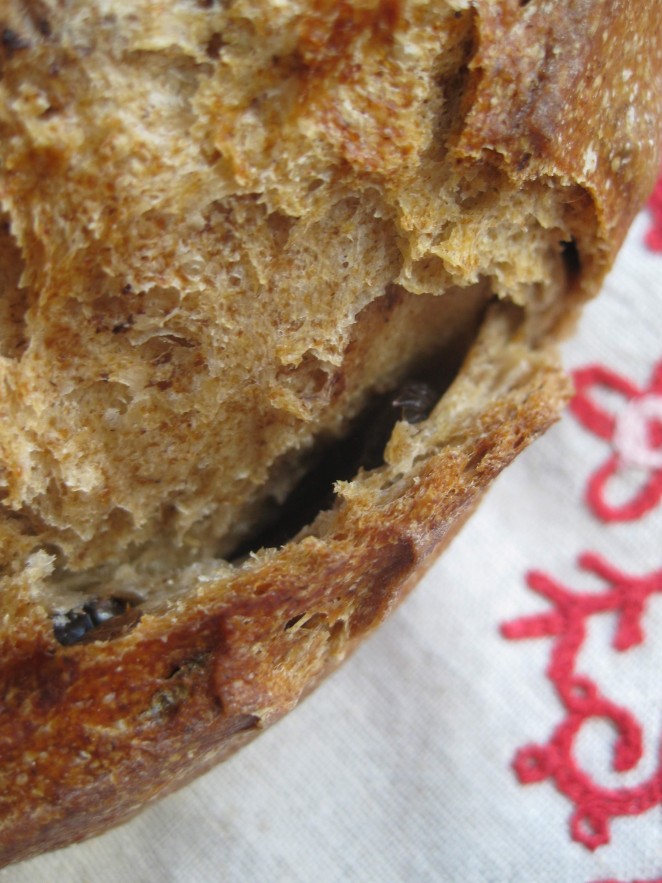
Black Forest Chocolate Chunk Cherry Bread

Black Forest Chocolate Chunk Cherry Bread adapted from lisamichele.wordpress.com – will make a soft, truly chocolate bread, not oversweet. I do not give a precise link here as I failed to find a working one myself… I guess that the website is inactive. I’m giving you the recipe which I copied some, I suppose, years ago instead – to keep the recipe going on the Internet.

Ingredients:

  • 3/4 cup dried cherries - mine were really sweet
  • 1/4 cup plus 2 Tbs rum (optional, you can soak the cherries in any fruity liquid you prefer) – I opted for the kumquat liqueur
  • 1 cup water
  • 1/2 cup dark cocoa powder, unsweetened
  • 2 3/4 cups all-purpose flour
  • 2 1/2 tsp active dry yeast – which I activated first in the warm cocoa
  • 1/2 cup sugar
  • 1 1/2 tsp salt – I used less + added some cinnamon for flavour
  • 3 Tbs softened butter
  • 1 large egg, at room temperature
  • 3/4 cup good quality chocolate chunks or disks - I chopped up a whole bar of Osoby chocolate

Method:

1. Place dried cherries in a medium bowl with half the rum, or whatever soaking liquid you choose. Set aside until needed. They will plump and soften slightly. – I used up all the amount of liqueur here.

2. Boil water and stir in cocoa until uniform. Let cool until tepid. I used the same ‘drink’ to activate the yeast.

2. In a bowl combine 2 cups flour, sugar, yeast, and salt, then slowly pour in tepid cocoa/water mixture.  Add softened butter and mix until it’s blended in. Add the egg and keep mixing until uniform and brownie batter like.

3. Slowly add in the remaining flour (more or less depending on weather) until you have a slightly stiff dough that’s easy to work with. Knead the dough until it’s smooth and silky – slapping against the sides of the bowl cleanly, about 10 minutes, or dump it on a floured pastry board and knead by hand.

Black Forest Chocolate Chunk Cherry Bread

4. Form the kneaded dough into a smooth ball. Lightly grease a large bowl, and place the dough in it turning to grease the top. Cover with plastic wrap and let rise in a warm place for about an hour or so, until doubled in size.

5. When doubled in size, fold dough over itself to deflate it, then place back on a clean floured pastry board, flattening it. Add the cherries with the soaking liquid and the chocolate chunks, then fold the dough over itself several times to start incorporating them. The cherries and chocolate will keep popping out of the dough with some falling out. It’s OK, just keep pushing them back in and kneading. Let rise in the greased bowl, covered, for another hour.

Black Forest Chocolate Chunk Cherry Bread

6. Form the dough into a loaf shape, and place in a greased and lightly floured loaf pan. Cover with lightly greased plastic wrap and let rise until more than doubled, rising above the top of the pan – about 1 1/2 to 2 hours. Could be less depending on how warm the area you keep it in is.

7. When the dough looks about ready, preheat the oven to 180 ‘C for 15 minutes. Place in the oven and bake for 35-45 minutes. This is a very dark chocolate bread, so you can’t tell by color. I usually check it with a toothpick. I had to cover the loaf with foil at the end of baking, it was getting far too black. And I baked it for about 60 minutes!

8. Let cool in the pan on a wire rack for about 10 minutes, then turn out of pan and place on wire rack to cool fully. Brush with remaining kirsch or whatever liquid you used if flavored over top of loaf. I didn’t brush anything over it.

Black Forest Chocolate Chunk Cherry Bread

{cherries create a chewy side to the bread}

The result: this sweet bread is really soft and its sweetness is… occasional, because you never know when the sweet cherries or the chocolate chunks will burst in your mouth.) Add more sugar if you want it sweet or if you use sour cherries and biter chocolate, for example. I think it also lacks some distinct flavour – mine had some from the kumquat liqueur, for sure (and none from the cinnamon I fear), but it would have gained from something special.

Black Forest Chocolate Chunk Cherry Bread

With all the May holidays here (1st May + the Victory day) there’s a very little one can do to search for a job. So… Where’s my halara mode button? Happy holidays – and a happy new warm season!

G.

St Petersburg the Great Part 2

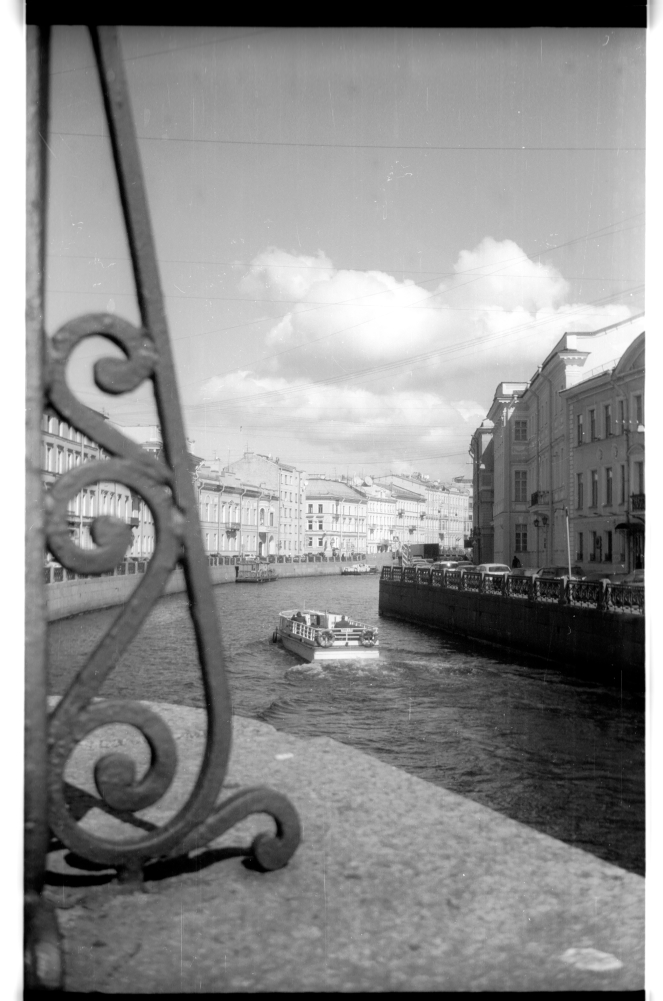
St Petersburg is a vast and rich subject to talk about, which for everyone who live(d) there or went there will be just as any other city unique. As I grew up in the suburbs, on the way to Moscow, with no immediate access to the metro that will take you to the centre in no time (almost), I regarded each trip to St Pete as a holiday (and it was usually some holiday), as a ‘going out’. Mom took us to the theater, museums, rarely to a store, or we would go there on a school bus trip. Even now I still consider going there as a certain ‘move’ and there are still so many places on the map that are to be united and linked to form the complete picture – you know, when you visit places by getting there from the nearest metro station or by bus or even on foot – these are truly different experiences. I would love to move around my city on bike too but unfortunately the centre is yet unbikeable, at least for those who would rather stay alive. It’s weird but most of the bikes in the centre are those rented by tourists. I prefer walking because even on a bike the experience is less intimate – you need to physically WALK those streets, bridges, parks and embankments. So let’s walk some more, eh? If you want, you can accompany our ramblings by google maps but you’ll see the itinerary is rather hectic.

Anichkov Bridge over Fontanka

{View from the famous Anichkov Bridge over Fontanka}

This IS what St Petersburg is all about for me – cable against the sky (not always THAT blue and bright) and the roofs (used to be all rusty when looked at from the astonishing 100 meter dome of St Isaac’s Cathedral), almost inevitable in all the photos. Sometimes the criss-crossing sagging cable looks a bit… menacing.

Lion Bridge over Griboyedova Canal

The cable is just everywhere, running from one building to another or in some unknown direction, you’ll spot it on the most of the photos. The bridge above is the Lion Bridge over Griboyedova Canal. The lions have lost their luster but still contributing greatly to the overall view – well, how would you look after some 190 years on the same place? ;) We have lots of lions in the city (if you ever watch the USSR-Italy film the Unbelievable Adventures of Italians in Russia, you’ll get an idea), poems and books are written about them. A royal city, no doubt. Also these straight lines for trolley bus is a characteristic trait of St Pete:

Mikhailovsky Castle

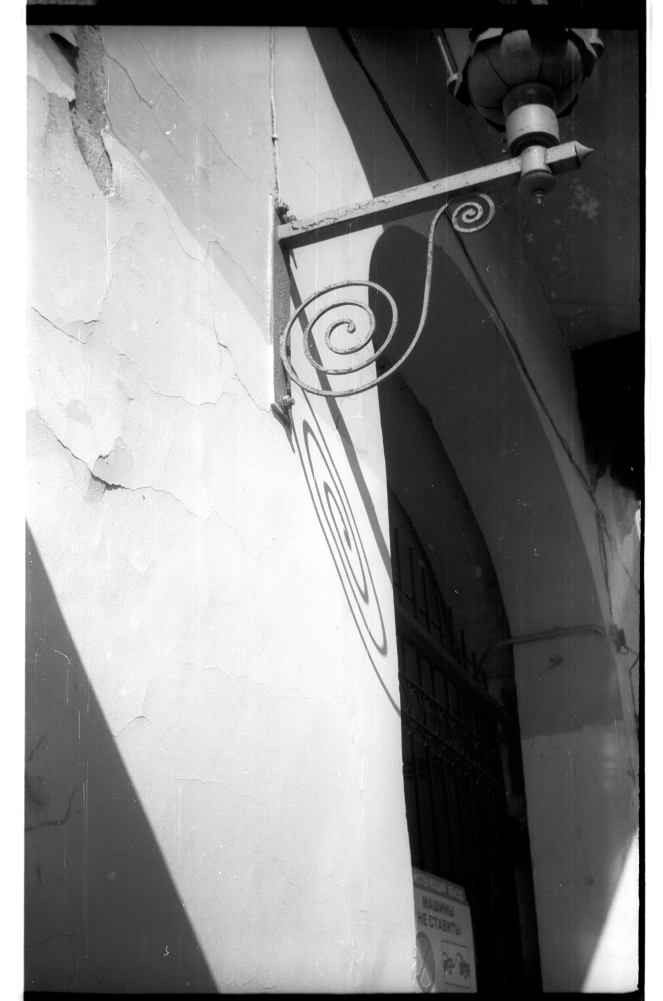
One of my favourite ‘objects’ to be photographed in any city – if there is such – is a street lantern against some building. This is the First Park Bridge next to the Mikhailovsky Park and Mikhailovsky (or Engineers’) Castle, late 1790s, built for Paul I who was into knights, military stuff and protecting himself from being assassinated. Sadly enough he actually WAS killed as soon as he moved to his new castle! I remember we went there with our class and only having arrived at the gates of the castle did we discover that it was closed and there will be no excursion. All the lunch lovingly packed by mothers was eaten the same moment everyone got on the bus again – this was actually one of the ‘points’ to go on an excursion for the children – be independent and eat something you would not normally eat, especially in my childhood when all the individually packed juice and buns and crackers and chips appeared in the market. First thing you do when you get on a bus? Tear open the potato chips and coca cola! By the way, there are also the cable lines for trams:

Tramway park

I came across this park on the Petrogradskaya side after a job interview, just after having read about the trams and konka (horse-driven carriages, also double-decked, which have become obsolete only in the 20th century. There were also large coaches on iron-bound wheels. Can you imagine the ‘pleasure’ of such a ride on a paved road?). The best way to explore any city is to ‘unleash’ yourself, forget about the direction and just walk. Just in case – take a map but do not restrain yourself to following some particular direction – just consult it every now and then not to walk into a highway or something. If you do walk like this, you might find an ex-factory (apparently very old) turned into a yoga centre, for example (this is a somewhat weird transformation but lots of factory buildings are now let as office premises):

ex-factory

Or you can even – sometimes unintentionally – follow somebody. A girl has just closed this solid looking door, disappearing inside one of the buildings along Izmailovsky Avenue. If you go along the avenue away from the Fontanka River, you’ll get to the Trinity Cathedral.

Izmaylovsky Avenue

Apart from lanterns, I love doors. Because they leave you musing upon what’s inside – for me also because I have rarely been to the old buildings in St Petersburg. There are doors like this – a typical 19th century paradnaya, a front entrance (in St Petersburg we call actually any door to a building paradnaya – the rest of the country calls it pod’ezd – hehe, even a wikipedia entry mentions this fact!):

Griboyedova Canal

{Griboedova Canal Embankment}

The external gutters (there on the left of this photo) amaze foreigners and represent a certain joy for the young rascals in spring – to hit the pipe’s end to release the ice inside. It was also used to burn your school diary with baaad marks (dunno if it’s used the same way now). Or there are doors like this:

door on Fontanka

Actually this is a front door to a house on the Fontanka River, right in the historic centre. I was lucky to have a peek inside expecting to see a dilapidated but formerly lush staircase…

inside

Nope. A row of door bells underneath the post eeh slots. I wonder what’s behind this rock. A vintage staircase? ;) Last time I told you about komunalka (shared apartments) a bit, this hallmark of the Soviet common-everything principle. But even in the times of the Russian empire, St Petersburg was the second most densely populated city after Moscow – by this I mean the number of people crowding in the same apartment – in 1910 there were 7 people per flat here (surpassed only by Moscow’s 8.7 and leaving far behind London’s 4.4 or Paris’s 2.7 around the same time). The typical building in Peter was a huge multi-flat 4-5 storied house, called dokhodny dom (a house which gives income (dokhod) for the owners),where people from all walks of life could find a place to live – a posh apartment with an enfilade of rooms – or an ‘angle’ – literally a small section of a room or a corridor where an entire family could thus ‘nestle’. Almost every building along Griboedova Canal was a dokhodny dom. Read Dostoevsky – his characters lived in a house with a blunt angle (the same Canal, No. 73)! Not this one, though, this is No. 100 and its trick is that it’s actually a diagonally broadening building which you’ll see if you move to the right a bit.

Griboedova Canal, dokhodny dom

This photo was taken a year ago back in March when I went to Mariinsky theater to get a job (still have some photos from the inside unpublished : ). This year I went by its new stage which looks not greater than a year ago when it was all under construction and there was still some hope of it getting better somehow. Well, it did not. I prefer the old building with all its Soviet entrails. There’s a line from the famous Soviet cartoon about Cheburashka (you definitely know this nondescript creature, it’s also our Olympic mascot) that people in Russia recall when talking about hmmm weird buildings to say the least – We have been constructing and constructing and finally we have constructed!

the old and new Mariinsky Theatre

The bridge is called Torgovy because there was a market place called Litovsky rynok, a historic place dating back to the late 18th century, demolished to build ehhh the new stage of Mariinsky. If you turn around on that bridge, you’ll see the subtle bell tower of Nikolskaya Church on the Kryukov Canal – and again some specimens of the St Pete architecture. To the left is the building belonging to the theater where on the unique day of each month every one from the simple mechanic to a diva elbow their way towards a small window to get their salary. As a true Soviet establishment, this place is ruled by the only god – bukhgalteria, accounts department.

Nikolskaya Churh on Kryukov Canal

And if you follow the same ex-Torgovaya Street away from the ugly new Mariinsky, you’ll get into a komunalka perhaps, if you’re lucky enough to know the owner of a room there. No, I didn’t get the photo of the corridor, nor the common kitchen, bathroom, etc. I would tell you just this – you’re all lucky NOT to be living in a komunalka. Yes, it’s a unique experience, who’d doubt it but… Count me out.

Casa Antonio

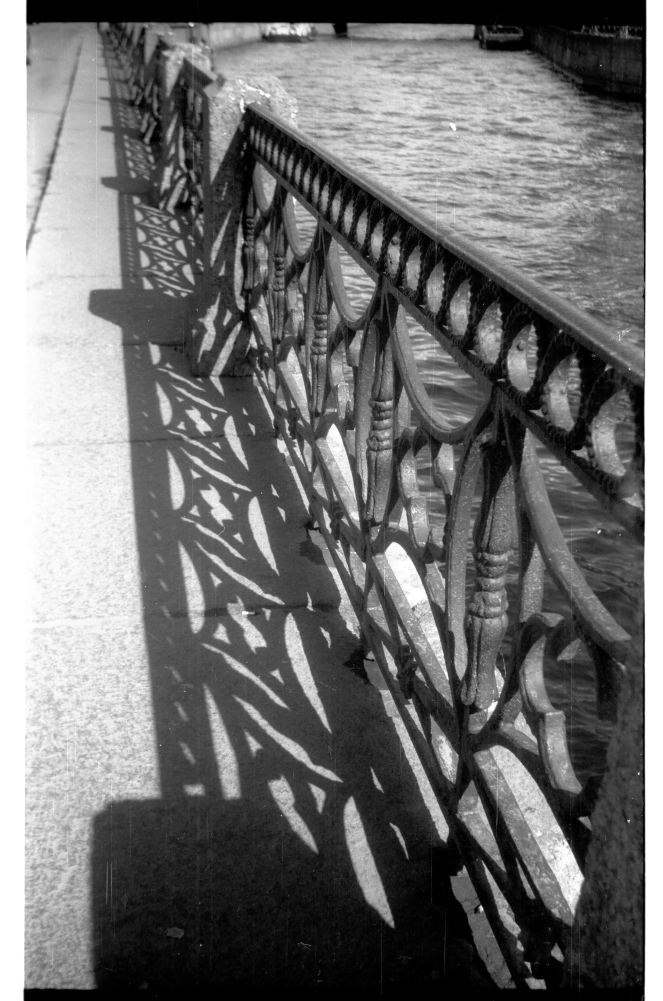
From the room’s window (which is in a late 1880s house) you’ll see one of the street’s numerous dokhodny dom (the sign reads Casa Antonio – could have been anything from a restaurant to a sanitary ware store somewhere in early 2000s). The Soviet power had not much to change to create komunalka there. A more lush view over the houses along Griboedova Canal (after the Lion Bridge heading towards Nevsky) with the stone embankment, one of the essential elements of St Petersburg:

Griboyedova Canal

No one can claim that St Pete is just this Europe-oriented city with straight lines of historic buildings. There are other things as well, such as the Soviet heritage, a view of a typical late Soviet mnogoetazhka (high-rise), called at the time of its construction novostroyka (taken from the window of an identical mnogoetazhka of a different colour). Now it’s getting battered quicker than buildings which are much older. Well, at least my grandparents were among the last lucky people who got their flat from the Soviet government, right on time. Because we were seven in our flat in the early 1990s, just as the statistics claimed for the 1910.

typical late Soviet architecture

{and yes, these are the future tomatoes… the annual job of my Granny}

And just for ‘fun’ – the entrance to the museum of Rimsky-Korsakov, the composer of the Snow Maiden (Snegurochka) opera, actually, it it his flat with the preserved objects and furniture. The sign’s there since the 1960s I suppose ;) We couldn’t find the entrance, I mean, what we supposed to be an entrance, just a regular ‘fortified’ door. Only later did we learn that you should just ring the inter-phone just as you would do for a regular flat. Next time! There are sooooo many museums in Peter, I’m ashamed I have been to a ridiculously small number of them.

Rimsky-Korsakov's Museum Entrance

{the museum is situated in a curious yard of Zagorodny Avenue, with a checkerboard on the ground}

Tired? Me too! Had to delete several photos… And after a walk in Tsarskoye Selo it occurred to me there will inevitably be a third part to this story.) Hope you’re tempted to see the Great St Petersburg, m?

G.

St Petersburg the Great

Let’s take a walk in the spring-time St Petersburg, the ex-capital of Russia, previously known as Petrograd and later Leningrad (it was called so when I was born, khm, well, I was also born in the country that doesn’t exist anymore). Its names and nicknames include the City-on-Neva, the Northern Palmira, the Venice of the North or just SPb or Peter (not that much to honour the founder of the city but that’s what’s left after Saint and ‘burg’ disappear in colloquial speech). My city is huge and I still have several metro stations that I have never entered/ exited in my life. It’s also expanding, although not that recklessly as Moscow. It’s younger than the capital by some 556 years, it actually is young, with only 310 years behind it. It has been sieged and bombed, its habitants were starved to death but the city did not give up. There are people still living in kommunalka (former spacious dwellings of the rich converted into shared apartments with a long corridor and one bath for everybody) and there are still the true leningradtsy, the examples of an intelligent culture-oriented citizen (mostly women, called leningradka). The visit to the main exhibits of the city’s ‘must’ museum the Hermitage will take you days (but first yeeeeeeeeeears – to get the ticket) – though the city itself is a living museum of all kinds of attractions. It’s criss-crossed by canals and some of its streets are ex-canals too – and there’s the vast River Neva, the ‘mother’ of the city.

Troitsky Bridge across Neva

{Troitsky Bridge across Neva}

And of course the white nights when the city doesn’t sleep would have been not that spectacular without the bridges that are being drawn in the night during the navigation season. The city has it own urban legends and jokes, particularly linked to the drawing of the bridges, as the two sides of the city are thus cut off from each other (an excuse for coming late – or never showing up!). Bridges are at the same time everywhere but most often there’s a lack of bridge right when you need one – or there IS one but it’s drawn ;)

The book about the life in St Petersburg a century ago which I have recently read is based on the memoirs of two contemporaries, the eyewitnesses of the period – this makes reading it easier and sometimes even funnier, especially about the school memories of the authors. It’s sometimes hard to imagine things as they were 100 years ago – and sometimes so very easy, it seems that there were only 10 years separating us from those times instead of 100…

old St Pete objects

{two artifacts from the ol’ times, the iron might as well count 100 years!}

I liked the passage in the book explaining the typical St Pete habit to have dacha (country house) so that you can escape the city in stifling summer period. Starting from the middle of the 19th century, leaving the city for their dacha gradually becomes a mass trend, which could be mostly explained by the wide-spread perception of St Pete by its habitants themselves as an unnatural city with disastrous life. This motif ha dominated the ‘Petersburg texts’ of the Russian literature right from Pushkin’s Bronze Horseman and Gogol’s Petersburg Stories but fully developed in Dostoevsky’s novels. Failing to break loose from the ‘cursed’ city, the people were seeking at least a temporary rest in its suburbs. Surely there were purely practical reasons for this trend: the air was getting polluted with all the factories, the bustle & hustle in the streets became unbearable and the city was transformed into a construction site with so many seasonal workers – enough to make even not that well-off citizens to seek refuge somewhere in the country! And from then on the elektrichka (suburban trains) got packed with dachniki (dacha-goers) each weekend from early April to late November (the book says the train would make a planned 10 minute stop in Gatchina for the sake of lunch-bar where they served famous gatchinskie pirozhki – pies : ).

typical blind wall

{a typical blind wall – not very joyous, is it?}

scary playground on Bolshaya Podyacheskaya Street

{this playground is a bit claustrophobic}

Oh-oh, we need something more positive! Here’s a view over the central part of the city, from a tiny wooden Gorstkin Bridge across the Fontanka River- somewhere in front there is Nevsky Prospect. The latter would need a separate post for sure, with its being the city’s main ‘vein’ full of landmarks, historic buildings and stores. The book says there were 7 overlapping ‘waves’ that created its patchy look – various kinds of commerce and institutions which had their sections of climax and of quasi absence throughout the avenue. I tried to see whether they constitute the same picture today and I guess there are certain traditional areas which are still perpetuated – like delicatessen and posh stores concentration area around Gostiny Dvor. But all this will tell you nothing unless you visit the museum-like Eliseevsky Store, Gostiny Dvor itself and Passage.

Fontanka from Gorstkin Bridge

{typical classical buildings with columns rising max. to the 4th floor}

For example, one of such buildings can be found on the crossing of Karavannaya Street and Nevsky, with a characteristic bulochnaya (baked goods store) right on the angle.

Karavannaya Street

The next building’s reflection in the window of this fancy-looking gadget store:

a shop on Karavannaya Street

{a shop on Karavannaya Street}

Always wanted to have a look what’s inside such grand mansions. Here’s a typical staircase in one of the buildings in the centre, enormous windows, long flights and impossible height of the ceiling (impossible particularly for those living in khrushchevka):

typical staircase in the centre

I’m sure there were komunalka (more about them in the 2nd part) in this building during the Soviet times and might as well still be so. Wonder what the famous Tolstoy‘s House (not the writer) overlooking the Fontanka River look like inside, with its buildings forming a long internal court and veeery posh cars parked there:

Tolstoy's House in St Pete

Sure enough not all the city centre is a straight line of sophisticated mansions of the 19th-early 20th centuries. Let’s move to the other – Petrogradsky – side of the Neva River, to the realm of modernism, art-nouveau and early Soviet architectural examples. Apparently the Soviet monumental architecture was trying to reproduce – and surpass! – the classical buildings of the city’s imperialistic past, could hardly fit it in a photo:

Soviet giant on Bolshaya Monetnaya Street

{a Soviet giant on Bolshaya Monetnaya Street}

And this is another monumental-looking building just next to the giant:

Bolshaya Monetnaya Street

Very graphic trees – soon to be all green but right now constituting a sort of ensemble with the monumental architecture – the same Bolshaya Monetnaya Street. Love the names which reveal the history of the city, its habitants’ jobs or activities – moneta means coin. Talking about modernism:

Malaya Posadskaya Street

{Malaya Posadskaya Street}

Mayakovskogo Street

{Mayakovskogo Street, near Nevsky}

As always, there’s ‘paradny Peterburg‘ (its glossy face) and … it’s not that much attractive side, Bolshaya Podyacheskaya Street:

Bolshaya Podyacheskaya Street

On the same street, the fire brigade building with the tower:old fire tower on Bolshaya Podyacheskaya Street

The book says, a century ago there were black balloons hanging from the tower when a fire was detected in the city – the number of them showed the district (substituted by lights during the night). There were no balloons on the tower that day but I spotted a man in the light reflecting clothes on the top, surveying the city for sure.

And for sure does he love this typical fish the typical woman is selling:

the famous koryushka fish

The St Petersburg would be different without its smell… And although I – sorry – hate fish – this smell will always bring me home. The fish is called koryushka and here it’s sold on the Sennaya Square just next to Bacon from Novgorod =) As I’m not a fish eater, I can tell you little about this fish but be sure it’s most often accompanied by beer or vodka.

Vodka, yes, some information about it: the royal family had the monopoly for vodka, so there were only two types of it – in a bottle with a white (more expensive) and a red (cheaper) ‘head’. The lavka (store) where (and only there) one could buy vodka (called kazenka as it was owned by the government, i.e. it was kazennaya) was managed usually by a widow (!) selling watermark paper, post stamps and packs of cards. The other window was managed by a tough man selling wine who could easily calm down any troublemaker. The inside atmosphere was quiet while outside the life was blooming even when it was freezing – picturesque women in heavy skirts were sitting on large pots with hot potatoes and selling them and cucumbers, there were coachmen ready at hand and policemen who seemed to be all blind (having receive some ‘treat’ from the regular customers). The entire plaster wall of the kazenka was ‘decorated’ with red circles as the cheap – red head- bottles were beheaded right on the spot.

A year ago – More on Smart Use of Leftovers with some ideas on how to never throw away food stuffs.

More on St Petersburg in the second part of this post (this one was getting too long) – komunalka, Soviet heritage architecture and other things. Happy 1st May (whatever it is) and hope it’s as sunny as it finally got here!

G.

Apples and Oranges

I need to finish with the queue of the wanna-be posts – there’s a St Petersburg spring post preparation being in the process of reading & taking photos already. I think I’m falling in love with my city once again, deeper this time. It’s so diverse and yet undiscovered, you just need to open your eyes and soak in the details before the tourist season begins. Good timing!

Well, to cut the long story short, this post is about four sweet things I’ve done recently – there will be a choice of 2 cakes, yeast rolls and cheesecake bars – reunited under the Apples and Oranges as their characteristic ingredients. Does anybody remember (“laughter?” Wait, that was Robert Plant saying this)… APPLES? Haha, it was only an illusion that once all the apples from your garden are up, the apple issue is closed. We’re still dealing with them here, now with all the ‘derivatives’, such as apple compote or apple jam. The apple compote is a clear sort of juice from small and not very ‘successful’ (sweet) apples traditionally made by my grandparents in three liter jars. The trick with it is that it contains the apple halves which only my grandparents seem to be eating once the compote is over.

Apple Cake and apple compote

Don’t tell me you would easily throw them away when you know how much effort it takes to make the compote, nononono. So I’m using these already processed apples in cakes where fresh apples are required – and the result so far has been just fine. More apple recipes here.

A year ago – Biscotti and On Soviet Food Stupidities featuring chewy biscotti, black days and sausage elektrichka.

Let’s start with the Apple Cake adapted from www.sbs.com.au/fooda simple recipe which will make a lovely looking cake which is soft and vanilla-delicious (and let’s count it as my first Australian recipe here).

Changes were scarce: less butter but + olive oil + sour cream; fewer apples (and from compote).

Apple Cake

The icing sugar eventually disappeared creating a sort of sugar crust on the top. The texture of the cake is something like that of a sponge cake or the Russian ‘apple sharlotka cake but thicker (and there’s butter in it). The amount of apples can be increased, I mean, I suggest you use the amount indicated in the original recipe, to make a perfect balance between the sponge part and the apples.

Apple Cake

The result: As far as I remember;) it was very good. I’ve tried also a similar recipe from the collection on the SBS site, Sica cake with pears – also using the same apples from compote + a fresh pear (added some ginger for flavour and should have used more flour cause the apples and pears sank to the bottom, so that I had to invert the cake upside-down, but who’ll mind?). A good recipe for apple compote leftovers!

Apple Cake

Another linen towel from the kitchen heritage left from our grandparents – supposed to be used only for special family occasions, which I guess if ever happened than it was very very very rarely. Mom made a whole photo session with the next hero of this post (all photos here were taken by me):

Sweet Orange Rolls

We’ll alternate apple with oranges, right? And also the type – this one is a leavened dough dessert.

Sweet Orange Rolls adapted from TheBakingPan.com are indeed sweet, soft, tasty and the aroma is… !

Changes: Less yeast; added ginger to the dough; less butter; less salt. I skipped the glaze and just brushed the tops with freshly squeezed orange juice – and actually with all the sugar syrup which escaped from these cute things they were still very sweet!

Sweet Orange Rolls

No leftovers this time, unless you call the orange zest which I try to keep from the oranges we eat leftovers. Even before these are roll(ed)s, they look fine – with the sugar crystals and the orange zest against the rolled out dough. The sun was quite elusive that day, but how éclatant they look when there’s sun!

Sweet Orange Rolls

The process will take time but, yes, it’s worth it. Pity they disappear quicker then they’re made ;)

Sweet Orange Rolls

Cute things, aren’t they? In the affectionate colloquial Russian a girl would call them ‘pusechki’ (cute little things; eh, Russian is so rich in all the suffixes and prefixes and stuff, you really start appreciating it when trying to translate a word with a couple of prefixes here and suffixes there – and yet this is not Finnish!).

Sweet Orange Rolls

Result: As their name suggests, they really ARE sweet – even without the glaze (i.e. mine contained minus 3/4 cups sugar and minus all the syrup which escaped while baking) and fragrant. An orange-y must.

Apples? Cheesecake? Bars? And leftovers! This recipe helped finish a jar of apple jam ;)

Caramel Apple Cheesecake Bars with Streusel Topping

Caramel Apple Cheesecake Bars with Streusel Topping adapted from www.melskitchencafe.com is very nice with jam instead of fresh apples – and without caramel sauce.

Changes: less butter for the base; more cream cheese (2,5 250g packs of 5% tvorog) for the cheese layer; apple jam with slices + cinnamon + nutmeg instead of fresh apples and sugar; less brown sugar for the topping; no caramel sauce.

Caramel Apple Cheesecake Bars with Streusel Topping

Result: The recipe yielded a large four-layer slab of tastiness. As I increased the amount of cream cheese, the bars has a distinct cream cheese layer which worked as a contrast to a rather sugary topping and sweet apple slices from the jam. Plus the base. Wonderful! If your cheese is as tangy as the Russian tvorog, you can increase the sugar but be careful not to overload the whole thing with sugar!

Caramel Apple Cheesecake Bars with Streusel Topping

Some time later the cheesecake layer soaked in the juices from the apple jam becoming brownish but that added sweetness to the cream cheese. The topping is crunchy and quite sugary – especially if you use coarse sugar. Well, there are also oats, let’s not forget it ;) The trick of these bars is to enjoy the four layers ensemble – without loosing the topping!

Caramel Apple Cheesecake Bars with Streusel Topping

The escaping topping and the sugar granules are visible here:

Caramel Apple Cheesecake Bars with Streusel Topping

And now on to a recipe not that much orange-y but I made it such. It’s from a Greek blog, there’s Google translate option, I checked it, just note that bacon powder=baking powder ;) There are photos and I think everything is clear.

Κέικ καρότου με καρύδια or Carrot Cake with Walnuts Cashews adapted from syntagesapospiti.blogspot.com will make a very substantial cake and several muffins!

Changes:

This is a real GREEK recipe which usually means a lot of eggs, sugar and oil. And all in all it usually means a recipe which will feed a crowd. So deal with it accordingly. What I did was to decrease the amount of sugar and oil (I used sunflower oil instead of corn), throw in the orange flesh along with the juice, use 4 eggs instead of 5, toasted and chopped cashews instead of walnuts +  cardamom, nutmeg and ginger to neutralize the egg flavour.

As for the impressive amount of the batter, I feared the never-ending process of baking such a large cake, so I made several rather large muffins, which took around 30 min to bake.

Keik karotou me karudia

The ‘topping’ that you can see in the photos is actually what was left from the Apple cheesecake bars from above.

Keik karotou me karudia

{blue-ish morning light flowing from the window and what a substantial bite for breakfast!}

Keik karotou me karudia

This is a no-joke cake, it’s very nourishing and chewy, with all the carrots and orange bits and nuts in it! I think that cashews played it well in the cake (I also scattered some on the bottom of the cake pan as I knew it would be the cake’s top).

Keik karotou me karudia

The texture is spongy and you can tell there ARE eggs inside ;) I do believe the fifth egg would have been a bit too much. You can also halve the amount of the ingredients to make, for instance, a batch of muffins or a smaller cake. So, the result is… more than enough!

Keik karotou me karudia

{Moomin muffin case, a gift from my sister}

The morning was so dull and moody with the heavy rain – now it’s sunny and spring-windy with clear white clouds against the bright sky. The spring has overcome the St Petersburg‘s 230 (other sources say from 150 to 1500) shades of grey which a true St Pete citizen should be able to distinguish. And yes, St Petersburg, you will finally get your personal post!

G.

Follow

Get every new post delivered to your Inbox.

Join 148 other followers

%d bloggers like this: